The Thirteenth Seat: The Roman Hijacking of the Messiah’s Message
Brothers and sisters, it is time to face a difficult truth.
Paul was never one of the Twelve Apostles chosen by Yahshua. He appointed himself the thirteenth, and his teachings stand in direct conflict with the Messiah on many core issues.
Rome later took Saul’s contradictions — the man who later became known as Paul — amplified them at the Council of Nicaea, stitched pagan elements into the New Testament, and created the hybrid religion we now know as mainstream Christianity.
The result was a system that replaced reverence and obedience to our Creator, YaHuWaH, and His commandments with hierarchy, tithes, blood-sacrifice theology, and a three-headed deity.
Let’s examine the evidence plainly — holding the inspired words of Yahshua and the apostles against Paul’s letters, point by point.
Paul Was Never a True Apostle — Yahshua Warned Us About Him
Yahshua chose exactly Twelve Apostles who walked with him, learned directly from him, and were told to teach everything he commanded — Matthew 28:20. The apostles had to meet certain requirements.
Candidates had to be eyewitnesses who had accompanied Yahshua during his entire earthly ministry — from John’s baptism until the Ascension — and they must have also witnessed him in his resurrected form, as stated in Acts 1:21–26
When Judas ceased to be an apostle (for obvious reasons) Matthias replaced him. He was chosen by the other apostles, who prayed and cast lots to determine the Creator’s will, as described in Acts 1:26
The act of casting lots was not viewed as chance, but as a formal and impartial method to discern the divine will, as stated in Proverbs 16:33. Matthias, who fulfilled all the requirements of apostleship, joined the eleven and became the twelfth apostle.
Revelation 21:14 still shows only twelve apostles’ names on the foundations of the New Jerusalem — no thirteenth seat for Paul 🚫
Paul never walked with Yahshua in the flesh. His entire claim rests on a private and contradictory Damascus-road vision of a bright light and a voice — Acts 9:7, 22:9, 26:14. Damascus is in the desert.
Yet Yahshua explicitly warned his followers not to believe anyone claiming to see him in secret places or the desert after his ascension — Matthew 24:23-27. They knew when Paul came on the scene who he truly was, a 🐺 in 🐑 clothing.
The real apostles in Jerusalem never accepted Paul as an equal. Tension and opposition ran high. It is Paul and Paul alone who claimed to be a chosen apostle. Unlike the twelve chosen apostles who walked with the Messiah in the flesh, Paul remains a strictly self-appointed figure whose entire authority rests upon a private, unverified vision.
From a legal and scriptural standpoint, his claim is fundamentally flawed; there is not a single contemporary witness or external record that validates his supposed encounter on the road to Damascus. He is, by definition, a lone witness in his own case.
According to the foundational laws of evidence established in Deuteronomy 19:15 and Matthew 18:16, a matter can only be established by the testimony of two or three witnesses. Even Yahshua himself submitted to this standard, stating in John 5:31, “If I bear witness of myself, my witness is not true”.
If the Messiah’s own solitary testimony was insufficient to establish legal truth, how then can the entire foundation of the mainstream church be built upon the uncorroborated claims of a man whose only witness was himself? 🧐
The Book of Acts presents a significant investigative anomaly: it begins by condemning Paul as a violent persecutor, only to pivot sharply into a narrative that elevates him. This shift frames his exploits to appear even more spectacular than those of Yahshua himself.
Paul even made this striking statement:
“Now I rejoice in my sufferings for you, and I fill up in my flesh what is lacking in regard to the Messiah’s afflictions for the sake of His body, which is the church”. Colossians 1:24. In other words, Paul appears to suggest that Yahshua’s suffering was insufficient and needed to be supplemented by his own.
This suspicious introduction of Paul in the Book of Acts serves as a strategic gateway, immediately followed by thirteen books of Pauline doctrine that effectively dominate the New Testament. If Luke was indeed the author, we must acknowledge that he was Paul’s own physician and personal scribe.
Luke’s Gospel contains suspicious and unverified “faith alone” doctrines that are not recorded by any other witness — such as the thief on the cross in Luke 23:39-43. It also claims that Yahshua instructed the apostles to buy swords in Luke 22:36-38, which directly contradicts his clear command in Matthew 26:52.
In the same way, the Book of Acts also contains a specific form of ‘leaven’. For example, Matthew 27:5 states that Judas hanged himself, while Acts 1:18 claims he fell headlong and his bowels gushed out. When important details like this contradict each other, it points to corruption in the text. Matthew walked personally with Yahshua, whereas Luke did not — he was not even an apostle.
Leaven is a corrupting influence — typically false doctrine or pagan traditions — that may begin small but eventually spreads and sours the entire body of truth.
While Luke may have been an innocent observer, he was clearly under the heavy influence, and perhaps even the pressure of Paul, to craft a legendary persona that would legitimise his master’s authority and ensure his lawless version of the gospel took root.
The Profile of a False Apostle: Boasting and Contradiction
Paul’s letters overflow with “I, me, my”. He repeatedly calls himself an apostle — sometimes the “least” — 1 Corinthians 15:9, other times boasting he “laboured more than all of them” and is “not in the least inferior to the most eminent apostles” — 2 Corinthians 11:5, 1 Corinthians 15:10. Spoken like a true narcissist.
He belittles the true apostles, saying they “added nothing” to him and only “seemed to be something” — Galatians 2:6. He curses anyone preaching a different gospel — Galatians 1:8-9 — which would include Yahshua’s own apostles!
He condemned Peter as a hypocrite for separating from Gentiles — Galatians 2:11-14, yet bragged about becoming “all things to all men” — acting like a Jew to Jews and lawless to Gentiles — 1 Corinthians 9:19-22, and he had Timothy circumcised — Acts 16:1-3, even though Paul preached against it — Galatians 5:2-4, 5:6, 6:15
He rarely quotes Yahshua’s actual words or deeds. If you only had Paul’s letters, you would barely know what the Messiah taught on earth.
Paul was a Pharisee — Acts 23:6, Philippians 3:5, a Roman citizen — Acts 22:27, and had Herodian ties — Romans 16:11
Yahshua said “Beware of the leaven of the Pharisees and of Herod” in Mark 8:15
He told others to imitate him as he imitated the Messiah 🧐
1 Corinthians 11:1 and 1 Corinthians 4:16
In Revelation 2:1-7, Yahshua praises the church in Ephesus for testing “those who claim to be apostles and are not, and have found them false”. Paul had strong ties to Ephesus. He was rejected by the Ephesians after many attempts to deceive them and admits their rejection of him in his own words in 2 Timothy 1:15. At that time, Ephesus was located in Asia.
Paul’s Direct Contradictions of Yahshua
Paul’s teachings flip the message upside down:
On the Character of YaHuWaH:
Yahshua taught that YaHuWaH is not the God of the dead, but of the living — Matthew 22:32 and Mark 12:27
Paul, on the other hand, calls Him “Lord of both the dead and the living” — Romans 14:9
Because Paul referred to Yahshua as “God in the flesh”, it is clear he was preaching idolatry while also contradicting Yahshua himself — Romans 9:5, Titus 2:13, 1 Timothy 3:16 and Colossians 2:9
On the Law/Torah:
The Torah commands that runaway slaves be given sanctuary and not returned to their masters — Deuteronomy 23:15-16
Paul, in contrast, sends the runaway slave Onesimus back to his master Philemon — Philemon 1:12
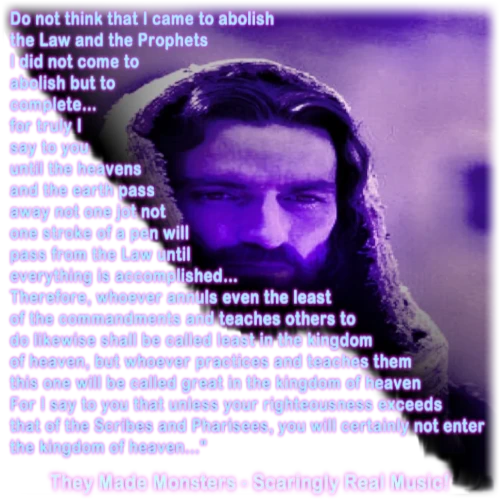
Yahshua declared, “Do not think that I have come to abolish the Law or the Prophets; I have not come to abolish them but to complete. Until heaven and earth pass away, not the smallest letter will disappear from the Law” — Matthew 5:17-19
Paul says the opposite: “The Messiah is the end of the Law” — Romans 10:4, the Law was “nailed to the cross” — Colossians 2:14, and believers are “not under law but under grace” — Romans 6:14. He calls the Law a “ministry of death” and a “curse” — 2 Corinthians 3:7 🐍
He appeared to loathe the commandments because he lacked the capacity to keep them, which explains why he was possessed — 2 Corinthians 12:7, afflicted — Galatians 4:13–14, and consistently bitter and angry — Galatians 5:12, 1:8–9, Philippians 3:2 and 1 Timothy 1:20
A large part of Yahshua’s mission was to set people free from demonic influence. Yet for Paul, the mission was completely inverted — he claimed that Yahshua actually gave him one!
Furthermore, the Almighty YaHuWaH said the commandments are not difficult to keep — Deuteronomy 30:11-14, and the Messiah said his yoke is easy — Matthew 11:30
On salvation and works:
Yahshua taught, “If you want to enter life, keep the commandments” — Matthew 19:17 and judged people by their deeds — John 5:28-29, Matthew 16:27, 25:31-46
Paul teaches justification by “faith alone” apart from works of the Law — Romans 3:28 and Ephesians 2:8-9
On eating meat sacrificed to idols:
Yahshua condemns it twice — Revelation 2:14 and Revelation 2:20. The Jerusalem Council under James forbade it — Acts 15:20, 15:29
Paul says it is generally fine — eat it unless a weak brother sees you — 1 Corinthians 8:4-12
On teachers and authority:
Yahshua warned to not have titles, “You have one Teacher, the Messiah… Do not be called Rabbi… One is your Shepherd” — Matthew 23:8-10 and John 10:16. He said to give freely without pay — Matthew 10:8
The liar Paul sets up many pastors, teachers, and elders worthy of “double honour” (pay) for preaching — Ephesians 4:11 and 1 Timothy 5:17-18. Paul also asks for material gains for his preaching — 1 Corinthians 9:11-14
I call him a liar because that is exactly what he has proven himself to be. Many people did not believe him, which is why he repeatedly felt the need to defend himself by declaring “I am not lying”. See Romans 9:1, Galatians 1:20, and 1 Timothy 2:7
Finally he is the inventor of the Sunday money collection 🤑
Paul sets up a money grab from believers to supposedly pay for ministry work in Jerusalem — 1 Corinthians 16:1-2
Every one of these examples stands in direct opposition to the commands of the Messiah, further confirming that Paul was never a true apostle. One could fill an entire book with the sheer volume of his contradictions; however, for the sake of this investigation, I will now move to the next subject, but not before making this final point:
Saul changed his name to Paul. He claimed the Messiah instructed him to do so, but I simply do not believe it. I believe it was a clever move by Saul to reinvent himself and conceal his violent past from his new audience.
For those seeking the full legal case against the thirteenth and false apostle, I highly recommend the dedicated websites and books referenced at the end of this chapter.
These contradictions were the perfect “leaven” Rome needed.
✍️
Rome Leverages Paul and
Corrupts Scripture
The Council of Nicaea, Constantine, and the Pagan Merger
Following the destruction of the Second Temple in 70 AD and the Bar Kokhba revolt in 135 AD, Roman authorities destroyed many Hebrew and Aramaic manuscripts in Jerusalem and suppressed Jewish religious practice across the region.
Later Byzantine Christian rulers continued favouring the Greek Septuagint while restricting Hebrew versions. Combined with deliberate editing by early church scribes, this contributed to the loss or heavy alteration of numerous original manuscripts.
That’s why we don’t have Hebrew or Aramaic versions of New Testament writings preserved today — other than fragments and traditions related to the Hebrew Gospel of Matthew.
The lying pen of Rome, carried forward by Christian scribes and scholars, twisted Isaiah’s “Suffering Servant” in Isaiah 53 to portray it as a prophecy about the Messiah dying as a human sacrifice for the sins of the world.
In reality, the passage is about king Jehoiachin and describes no such human sacrifice. Let’s get investigating and take a closer look.
🧐
The Pattern of the Servant: From Jehoiachin to Yahshua
The popular narrative of a human blood sacrifice unravels when we examine the original Masoretic Hebrew and the Great Isaiah Scroll from the Dead Sea Scrolls.
A careful reading reveals the story of a leader who chose to die to self, suffer for his people, and walk the path of truth and righteousness — rather than a future “God-man” dying to atone for the sins of others.
Many translations manipulate Isaiah 53:10 to fit a pre-planned dogma. However, a literal, unbiased look at the Hebrew — strongly supported by the 1917 JPS Tanakh and to a lesser degree by the NET, Berean Annotated, and Berean Literal Bibles — points to historical restoration rather than mystical sacrifice.
Most other versions twist the Hebrew grammar and replace or omit key words, as you will see.
The Hebrew Breakdown: Isaiah 53:10
וַיהוָה חָפֵץ דַּכְּאוֹ הֶחֱלִי
אִם־תָּשִׂים אָשָׁם נַפְשׁוֹ
יִרְאֶה זֶרַע יַאֲרִיךְ יָמִים
וְחֵפֶץ יְהוָה בְּיָדוֹ יִצְלָח
Literal Rendering — Truest to the Raw Hebrew:
“Yet YHWH delighted to crush him, making him weak with sickness. If his soul makes a guilt-restitution, he will see his seed, he will prolong his days, and the delight of YHWH will prosper in his hand”.
הֶחֱלִי
(he-che-li) means “He made him sick / made him weak” — from the root chalah, meaning literal physical disease, illness, or wasting away (the same word used for bodily sickness throughout the Tanakh).
אִם
(im) means “IF” — a clear conditional. Restoration is not pre-destined; it depends on the servant’s choice.
אָשָׁם נַפְשׁוֹ
(asham napsho) means “his soul makes a guilt-restitution” — the whole living being (nephesh) offers legal reparation / compensation for what was broken. This is not “lay down his life as a sin payment” but a voluntary act of making things right.
The “lying pen” — Jeremiah 8:8 — was inherited by Roman and early Church scribes who corrupted meanings to fit a pagan agenda. Mainstream versions soften “making him weak with sickness” to “grief” or “infirmity” to hide the image of a prisoner literally wasting away in a dungeon.
The scribes relied heavily on the Greek Septuagint (LXX) translation, which had already begun the process of swapping the words about physical ‘sickness’ for ‘grief’ and ‘restitution’ for ‘sin sacrifice’ to better suit a pagan audience. The majority of Bibles since then have continued this corruption 😕
Irrefutable Grammatical Proof
Past Tense & the Conditional “IF”
World-renowned scholar Bart Ehrman highlights that the entire chapter of Isaiah 53 is written in the past tense, describing a historical figure who had already suffered, been crushed, and vindicated — not a future “Messiah” event centuries later.
Mainstream theology claims the past tense in Isaiah 53 is a ‘Prophetic Perfect’ — a grammatical device used to speak of future events as if they had already happened. However, as a detective, we must ask: what is the most natural reading?
The Hebrew perfect aspect describes actions that are already complete. While Prophets sometimes use this form to express certainty, the most logical fit here is a historical leader like Jehoiachin, whose suffering was already a matter of public record for the exiles at the time.
The true shift to future tense occurs in verse 10, promising that this already-crushed king would survive, see his children, and prolong his days.
Deutero-Isaiah (chapters 40–55) was composed during the Babylonian exile for an audience living through that trauma. The servant songs were written to offer poetic comfort to the exiles, not as a crystal-ball prediction of a future Messianic Roman crucifixion.
Early Christians later re-read the passage through Midrash to apply it to Yahshua, but the original Hebrew never points forward. It looks backward at a past servant whose suffering and restoration were within reach of the original audience.
The word אִם (“IF”) is the grammatical key. If this were a pre-destined pagan blood-atonement ritual, there would be no “If”. Even the Gethsemane account shows Yahshua struggling — Matthew 26:39 — proving that the “If” reflects a real, personal choice.
The nephesh (soul) refers to the person being given the choice to offer restitution — a legal settlement, not automatic substitution. This confirms that the conditional “If” applies to the individual.
It is a moment where the king, even in his crushed state, holds the power to break the curse through his own repentance. The reward is children, prolonged life, and seeing the Almighty YaHuWaH’s will prosper in his life.
This does not fit the life of Yahshua...
The Blueprint: King Jehoiachin – Michael Goulder’s Ground-breaking Case
As scholar Michael Goulder meticulously argues in his 2002 study “Behold My Servant Jehoiachin” (Vetus Testamentum 52/2, pp. 175-190), every detail in Isaiah 53 snaps into place with king Jehoiachin. While some suggest the voice of Jeremiah in the “lamb to the slaughter”, it is the king who supplies the literal, historical match.
Jehoiachin came to the throne at just 18 years old. His reign lasted only 100 days (3 months and 10 days) before he was “crushed” and imprisoned in a Babylonian dungeon for 37 years.
He was the “root out of dry ground” (Isaiah 53:2) — physically wasted by disease while bearing the legal “stripes” of a nation’s curse. Goulder lines up the text point-by-point:
Isaiah 53:1 — “Who would have believed it?” — Jehoiachin’s sudden exaltation after decades of rotting in prison was miraculous.
Isaiah 53:2 — “a young plant… a root out of dry ground” — the boy-king snatched from the throne in his prime.
Isaiah 53:8 — “taken away… cut off from the land of the living” — dragged into captivity, with no hope of return.
Isaiah 53:5 & 8 — “wounded for our transgressions… a perversion of justice” — as the Davidic representative, he suffered for the nation’s sins.
Isaiah 53:12 — “allot him a portion with the great…” — released by king Evil-Merodach — 2 Kings 25:27-30, given a throne above other kings and a daily allowance for life.
Jehoiachin’s release was the definitive sign that the curse was breaking. It was not a story of a man dying to pay a blood debt, but the literal restoration of a king whose personal repentance in the dungeon paved the way for the nation’s eventual return to the Light.
The Dead Sea Scrolls (1QIsa-a) confirm this restoration by including “he shall see light” in verse 11 — an idiom for release from a dungeon. After repenting in prison (Talmud, Sanhedrin 37b), Jehoiachin was exalted and lived to see his literal, biological “seed” (zera) — his seven sons recorded in 1 Chronicles 3:17-18
Babylonian ration tablets record “Yaukin” (Jehoiachin) and his sons receiving provisions. These tablets, unearthed by archaeologists in the ruins of Babylon, serve as physical proof of his prolonged days and offspring.
The Talmud reference simply names what the Tanakh already shows: a man under a death sentence who was miraculously restored to life, honour, and a family line — a sequence that, in the Hebraic mind, only happens through repentance (Teshuvah).
While 2 Kings 24:9 uses a standard formula stating he ‘did evil’, this refers to his continuation of the corrupt system established by his father Jehoiakim. As the nation was drowning in the idolatry and rebellion of the previous generation, the 18-year-old Jehoiachin had only 100 days on the throne — far too short to warrant a 37-year sentence.
This is why Isaiah 53:8 calls his imprisonment a “perversion of justice”. He was personally innocent of the violence that ruined the nation, yet as the Davidic king he stood as the legal representative who chose to settle the account.
This fits Ezekiel 18 perfectly: the son does not bear the father’s iniquity in a blood-debt sense. Jehoiachin was not a pagan substitute being punished instead of the people — he was a leader who chose to bear the weight of his nation’s exile and end the cycle of rebellion.
While Jeremiah 22:24-30 saw Jehoiachin stripped of his authority like a signet ring torn from a finger, his eventual repentance in Babylon shifted the verdict. This change of heart led to his restoration in Haggai 2:23, where YaHuWaH overturned the curse through his grandson Zerubbabel, declaring: “I will make thee as a signet”.
By “dying to self” and offering restitution through his own repentance in the dungeon, he did not “pay for” sins — he settled the case with the Creator. His story is about personal choice and the restoration of a lineage, proving that YaHuWaH does not want a sacrifice ritual, but a heart that is willing to make things right 💖
An important point to note: YaHuWaH is firmly opposed to human sacrifice, as clearly stated in Leviticus 18:21, 20:2-5, Deuteronomy 12:31, 18:10, Jeremiah 7:31, 32:35, Ezekiel 16:20-21, 20:31 and Psalm 106:37-38
Yahshua and the Art of Midrash
Yahshua was not a human sacrifice. He was a “New Jehoiachin” who followed the standard Hebraic tool called Midrash — using previous characters and historical patterns to illuminate his own mission. We see this throughout the Gospels.
The Moses Pattern:
Matthew 2:15 quotes Hosea 11:1 — “Out of Egypt I called my son”.
It was originally written about the nation of Israel. This does not magically turn Yahshua into literal Israel. Instead, it establishes him as a leader following the Moses blueprint: coming out of Egypt to bring the people back to truth and deliver them from bondage.
The Jonah Pattern:
Matthew 12:40 uses Jonah’s three days to frame his own trial as a call to repentance. Does this mean Yahshua is Jonah? No. Does it mean he literally spent time inside a fish? No. It is a Hebraic parallel.
The writers used the historical pattern of Jonah — a Prophet who ‘died’ to his own will only to emerge with a message for the nations — to illustrate Yahshua’s transition through death and resurrection to bring the truth to the world. The Midrash pattern was also used to connect the king and Yahshua.
Just as the servant king Jehoiachin was the passive sufferer of the curse — yet chose to do the right thing through his repentance — Yahshua was the active Servant who came to finish the work and break it.
He ‘bore’ (nasa — carried away) the nation’s infirmities by healing diseases and casting out demons; a physical demonstration that he was removing the curses of immorality.
He didn’t die to satisfy a bloodthirsty deity, he lived to teach the commandments and lead people back into Covenant and life 🙏🏼
The Roman Twist and the Lying Pen
Rome literalised these Midrashic parallels into a death-cult, turning a story about a leader carrying burdens into a vicarious human sacrifice. Our Creator never wanted blood. He wants a heart that chooses life and “reasons” its way back to Him.
The evidence from Goulder, Bart Ehrman, the raw Hebrew (with its physical sickness, conditional “IF”, literal seed, and prolonged days), and archaeology is overwhelming.
Isaiah 53 is not a prediction of a future God-man. It is the triumphant testimony of a Davidic king crushed by sickness in prison, who chose restitution, survived, was exalted, saw his offspring, and saw YaHuWaH’s purpose prosper through him.
The writers utilised this Midrashic pattern to show that just as the king’s repentance brought restoration in his generation, Yahshua arrived to lead the ultimate restoration in his. While the king had to find his way back, Yahshua was the way back — teaching the people to repent and live righteously.
Anything else is the ‘lying pen’ of Rome, still trying to sell us a pagan blood-debt two thousand years later.
Scribal Corruption and the Trinity Mystery
Rome subtly twisted Isaiah 53 and fused it with Paul’s “faith alone” gospel, convincing millions that salvation comes through a simple prayer and calling upon the atoning blood of a false idol.
But it doesn’t stop there. The lying scribes’ work runs deep throughout the New Testament. Rome, its early church fathers, and later translators systematically twisted, added to, and corrupted the original Hebrew message. They turned a simple call to repentance and obedience into a full-blown pagan cult of hierarchy, idolatry, and blood.
In the 13 letters attributed to Paul, the concept of sacrifice forms the backbone of a pervasive blood-atonement doctrine. This obsession is taken even further in the Book of Hebrews, which relentlessly pushes the idea of a final, vicarious sacrifice for sins.
While Hebrews is anonymous, the fingerprints of Paul’s inner circle are everywhere: the author names Paul’s right-hand man Timothy, the logic perfectly reflects Paul’s “faith alone” arguments, and the oldest archives file it right next to the Book of Romans. It even uses the same clever “shadow” parallels found in Paul’s own letters to claim the Law of the Torah was merely a temporary placeholder.
This narrative eventually leavened the rest of the collection. The Petrine epistles and the anonymous 1 John were layered with identical blood-atonement theology, even featuring blatant trinitarian forgeries like the Johannine Comma of 1 John 5:7–8. While found in several Bible versions, this is a later corruption with no basis in the original Hebraic record.
When we look at the authentic Hebraic voices, the silence is deafening. Jude, Revelation, and the letter from James — the very brother of Yahshua — never mention a blood-atonement or a final sacrifice for sins. Moreover, Yahshua himself declared that the Law will not pass until heaven and earth pass away.
By the time these documents were compiled, the ‘lying pen’ of Rome had finished its work — burying the original call to keep the commandments under a mountain of counterfeit replacement theology.
These corruptions successfully diverted worship toward a human sacrifice and a confusing ‘three-headed idol’, hijacking the focus from YaHuWaH and steering it into blatant idolatry. By inserting these ‘dark spells’, scribes replaced the simple worship of the Father with a pagan mystery.
This shift forces people to depend on a religious system to explain a God that is no longer one, but three, directing worship toward a manufactured image. It buries the truth that YaHuWaH alone is the source of life and mercy.
While He speaks through His Prophets and His Messiah to lead us back to the truth, He requires no confusing pagan formulas or ‘mystical gatekeepers’ to stand between Him and a heart that sincerely returns to Him.
Yahshua’s greatest commandment is that YaHuWaH is one, not many — Mark 12:29, which is a direct quote from the Shema in Deuteronomy 6:4. On that point, John 1:1 is a strategic mistranslation — a linguistic rewrite that even the Jehovah’s Witnesses have identified as a corruption of the Greek 👉🏼 📖
It is a classic example of translation fraud designed to promote and support idolatry. The typical rendering — “the Word was God” — is nonsensical; you cannot be “with” someone and “be” that person simultaneously.
The literal Greek reveals that the Word was divine in nature. The Greek text of John 1:1 uses two different forms of the word for God: Theos and Ton Theon.
This “Word” was never a second head of a trinity. It was our Creator’s Torah — His blueprint and His will. When the Word “became flesh”, it was the truth of the Father finally manifesting in a man who chose to live out the Covenant perfectly, from the heart, leading us back to the One True Creator — YaHuWaH.
The Torah Made Flesh
Yahshua said, “The Scriptures are about me” — John 5:39-40, and he was right. He said, “I am the Way, the Truth, and the Life”. When we look closer, we see he was quoting the definition of the Torah: the Way in Psalm 119:30, the Truth in Psalm 119:142, and the Life in Deuteronomy 32:46-47
Wow! 😮
Yahshua wasn’t creating a new religion. He was the Torah made flesh, and he explicitly stated that he came to complete it. Do not be deceived by the manufactured claim that he came to be a ‘final human sacrifice’ — I expose this Roman redirection in detail on the page The Lie of Animal Sacrifices linked below.
As has been uncovered, our Creator YaHuWaH never desired blood, but a heart that chooses to live righteously.
There are many such subtle corruptions added to the New Testament, stitching the “dark spells” of paganism into the inspired words of Yahshua and the true apostles. Anything that doesn’t line up with Yahshua’s own words and those of the Prophets is leaven mixed in to deceive.
We shouldn't be naive enough to think Rome wouldn’t make a massive effort to layer in their paganism to influence the masses. If a verse points you toward a ‘mystery’ instead of the commandments, you know you've found the work of the “lying pen”.
The False Priesthood and the Roman Merger
Rome also formed a hierarchical priesthood that absolves sins only through a priest, a tithe, and the recitation of the Messiah’s blood. This simply perpetuates the same corrupt priesthood Yahshua came to expose.
Yahshua never taught this system. In fact, it runs completely contrary to his commands in Matthew 20:27 and Matthew 23:8-10, that there should be no hierarchy or titles among us. He was very clear in Matthew 23:9 that no one should be called our spiritual father besides the Creator.
Yet Paul called himself the father of the Corinthians in 1 Corinthians 4:15 🤔
The Messiah never claimed to be the Creator himself, nor did he teach a ‘trinity’. This pagan perversion was introduced by Constantine and formalised at the Council of Nicaea, establishing a destructive false theology that leads people to violate the essential commandment against idols.
Instead of listening to and obeying the Almighty YaHuWaH, many now direct their worship toward Yahshua in ways he never requested and never instructed. Rather than following his clear example of submitting to and glorifying the Father, they have made Yahshua the central object of worship — a practice that he himself never promoted. This shift has subtly moved the focus away from the One who sent him.
The “I Am” Misconception
When Yahshua says, “Before Abraham was, I am,” he is not proclaiming to be his Father. He is declaring that he is the Messiah who was foreordained before the foundation of the world — a truth confirmed in Revelation 13:8, which speaks of him as the Lamb slain from the foundation of the world.
A more literal and accurate rendering would be:
“Before Abraham came into existence, I am he”, meaning “I am the promised one”.
He was asserting his authority as the Torah made flesh — the original Word that existed in the mind of YaHuWaH long before any patriarch was born.
The phrase “egō eimi” — “I am” — is common Greek and is not used here to identify the Almighty YaHuWaH. The healed blind man used the exact same words in John 9:9 to say “I am he” — was he God in the flesh too?
Yahshua Himself used “egō eimi” to mean “It is I” on several occasions. In this context, Yahshua is saying that he is the one foreordained by the Father long before Abraham was born, not that he is the eternal Creator himself.
The Pharisees reacted with anger because they saw it as arrogant self-exaltation above Abraham and a bold proclamation that he was the Messiah, not because he claimed to be YaHuWaH.
How could he be his own Father when he constantly spoke to Him — Matthew 11:25-27, Mark 14:36, John 11:41-42 — was called out by Him in front of others in Matthew 17:5 and Mark 9:7, and is now sitting at his Father’s right hand in the heavens? This is confirmed in Acts 7:55-56, Mark 16:19, and Revelation 5:7 🧐
Finally, when Revelation speaks of the ‘blood of the Lamb’, we have to swap our Roman lens for a Hebraic one. It is not describing a pagan human sacrifice. It is a legal seal on a contract.
Just as blood was used in the Torah to ratify the Covenant, Yahshua’s life was the price paid to ‘buy us back’ from the slavery of sin and curses.
He didn't die to satisfy a blood-hungry deity, but to legally release us so we could return to the Father and keep the commandments.
A full and detailed examination of blood atonement, human sacrifice, and the “Lamb slain from the foundation of the world” is available on my dedicated page The Lie of Animal Sacrifices linked at the bottom of this page.
Moreover, in Revelation, the “Lamb” is never a Levitical sin offering; he is a Passover and Royal symbol. This is not about a ritual sacrifice for sin, but a Sovereign King who earned his authority through perfect obedience to the Father.
The forensic evidence is clear: the “lying pen” of the scribes has systematically replaced the truth with a counterfeit. Twisting Scripture in this way only leads to idolatry and lawlessness — which is exactly what Rome wanted.
By burying the call to the commandments under a mountain of pagan-style ritual and idolatry, they successfully diverted the heart of the undiscerning believer away from the Almighty YaHuWaH.
The Suppression of the True Followers
Rome went after and murdered many of the commandment-keeping, Torah-observant followers of Yahshua, calling them “Judaizers”. When Rome took control of the Gospel and corrupted it, the false doctrines of the Messiah as “God in the flesh” and as the ultimate “human sacrifice” were pushed on the masses.
Early on, the heretic Marcion (2nd century) — who coined the phrase ‘Old Testament’ — heavily promoted Paul as the true apostle, rejected the Tanakh and the true apostles, and created his own canon built almost entirely on Paul’s letters and a heavily edited Luke.
Rome rejected Marcion’s extremes but quietly kept the core of his Paul-centred, lawless foundation. Later, under Constantine, they merged it with pagan sun-worship, holidays, and hierarchy.
The result is the amalgamation we see today — pagan roots dressed up in “Christian” clothing.
Revelation and the Lying Pen
Apart from Paul exposing his own lies and contradictions within his letters, and despite Yahshua’s clear warnings about false apostles who would claim to have seen him in the desert, the Book of Revelation also exposes the false apostle Paul, his deceptive version of the Gospel, and his lawless movement which usurped the true Gospel and misled many early believers.
What the Book of Revelation is to the New Testament, the writings of the Prophets are to the Torah. Both of them reveal the corruption that precedes them.
Revelation disproves the lie of salvation by faith alone through grace by repeatedly highlighting the importance of works, repentance, and obedience to the moral commandments. It also refutes the false doctrines that make the Messiah “God in the flesh” and the pagan teaching of the trinity.
The writings of the Prophets tell us that our Creator never commanded burnt offerings and animal sacrifices and that a corrupt priesthood and their scribes added these and other falsehoods to the Almighty's Words and His Torah.
Another crucial concept to grasp is that our Creator permits false prophets to emerge and deceptions to exist in order to test us, as revealed in Deuteronomy 13:1-5
The Documentary Hypothesis
The Documentary Hypothesis is the idea that the Torah (the first five books of the Bible) was not written by Moses alone, but was compiled over time by several different authors and editors. This topic is covered in more detail later on this site.
Scholars generally identify at least four main sources — known as J, E, D, and P — each with its own style, vocabulary, and theological emphasis.
These sources were gradually woven together, sometimes with noticeable seams and contradictions.
This explains why we find duplicate stories, differing details, and shifts in how our Creator is portrayed. In short, the Torah as we have it today is the result of a long editorial process rather than a single divinely dictated book.
2 Peter: The Strategic Forgery
The second epistle of Peter is not what it claims to be. It was not written by the Apostle Peter. Early church leaders and the leading Protestant Reformers knew this. Both Martin Luther and John Calvin rejected 2 Peter as genuine. Eusebius, the official historian of the early Roman Catholic Church, openly admitted around 325 AD:
“One epistle of Peter, that called the first, is acknowledged as genuine. But we have learned that his extant second epistle does not belong to the canon” (Eusebius, Church History 3:3:1).
Yet it was still included in the Bible because it was considered “profitable” when read alongside the accepted writings. Why was this fake letter so useful? Because it does exactly what Paul’s own letters do — it defends Paul. Notice how 2 Peter 3:15-16 speaks of Paul as “our beloved brother” and treats his letters as authoritative scripture on the same level as the Tanakh.
This is extremely suspicious coming from Peter, who had serious public conflict with Paul in Galatians 2:11-14. Even more telling is the stylistic and doctrinal similarity to Paul’s writings. The letter pushes the same “grace” emphasis, downplays the importance of obedience to the commandments, and promotes a relaxed, faith-heavy approach that Yahshua himself never taught.
The forensic evidence is staggering: 2 Peter is essentially a mirror image of Jude. In a blatant display of plagiarism, 19 of Jude’s 25 verses are found in 2 Peter in a nearly identical form. This raises a massive red flag: why would a primary eyewitness — the apostle himself — need to copy someone else’s notes?
The author even performs a calculated editorial scrub — removing Jude’s references to the Book of Enoch to make the message ‘safer’ for a later, more rigid church. This is a clear hallmark of Roman influence. We know their corrupt scribes eventually removed 1 Enoch from the Biblical canon altogether.
The removal from the canon culminated in the 4th century (Council of Laodicea/Athanasius), but the push to marginalise it began much earlier as the Roman church sought to distance itself from Hebraic apocalyptic literature.
Early church figures like Origen, Augustine, and Jerome systematically maligned 1 Enoch, providing the theological cover needed to strip it from the Biblical canon.
By branding it ‘apocryphal’, they effectively suppressed the profound wisdom, the great detail of the Fallen-Angels, and the ancient understanding of the heavens that had been held as Scripture since the time of the Prophets.
2 Peter betrays itself by calling Paul’s letters Scripture long before that status actually existed. In the mid-60s AD (when Peter actually died), Paul’s letters were just correspondence circulating between his own assemblies.
In short, 2 Peter reads like a later forgery, most likely written by someone in Paul’s camp to bolster his contested authority and silence the real apostles who still taught obedience to the Torah commandments.
It is a classic example of how Rome and the early church allowed questionable writings into the canon if they helped promote the new hybrid religion they were building. The real Apostle Peter warned us about false teachers and destructive heresies. Ironically, a letter falsely bearing his name may be one of the best examples of exactly what he warned against!
While 2 Peter was used to prop up Paul’s authority, other early writings preserved a very different voice of Peter.
The Clementine Homilies and Recognitions
The Clementine Homilies and Recognitions are significant historical records that many scholars and truth-seekers believe contain the authentic, preserved teachings of Peter. As the apostle chosen to feed the Messiah’s lost sheep, one would expect Peter to have had much more to say.
I contend that he did — and we must actively seek them out 🧐
One of the most striking discoveries in these accounts is the ‘Letter of Peter to James’. In it, Peter gives a chilling, first-hand warning to James about “a man who is my enemy” who had already begun systematically twisting his words.
Peter reveals that this adversary was crafting a lawless, counterfeit Gospel specifically designed to mislead the Gentiles — a direct prophecy of the very deception that would eventually overtake the original message of the Messiah.
The forensic trail shows that these writings are not original first-century records. They are fourth-century redactions — institutional rewrites — of an earlier, lost work known as the Kerygmata Petrou (The Preaching of Peter).
This means the versions we have today were filtered through later editors. However, if we look past the veneer of translational perversions, we can still find significant treasures buried within their pages.
Evidence of Corruption: The Universal Test
So many believers find it difficult to accept that the Bible — the book they have been taught to revere as the perfect, inerrant “Word of God” — could contain deliberate corruptions and deceptions within its pages. However, I see this not as a failure of the Creator’s power, but as His perfect method for testing the human heart.
The Almighty YaHuWaH allowed the Fallen-Angel to test Eve in the Garden of Eden, and that encounter serves as the foundational blueprint for how He would proceed throughout history.
By allowing another voice, another option, and a deceptive choice to exist alongside the truth, He examines who will truly listen to His voice and who will be enticed by the “leaven” of men and spirits. The corruption of the text is the ultimate test of our discernment and our sincere desire for righteousness over religious comfort.
I recently put this to the test in a public arena. There is a link below to a comment I made in a debate on X with Christians who follow Paul and mainstream doctrines. They mocked me and claimed the Bible isn’t corrupted, so I showed them the forensic evidence that it most certainly is. Nobody replied.
At the end of the day, Paul’s lawless gospel and Rome’s clever corruption replaced the simple, clear teachings of Yahshua with a convenient mixture of paganism, hierarchy, and cheap grace. What began as a subtle deception has led billions away from true repentance and obedience to the Almighty YaHuWaH’s commandments. It is a true test of the heart.
The real question remains: Are we following the real Messiah, Yahshua — or the version Rome created?
Recommended Resources
Disclaimer: These extra resources are shared for their specific research value. Inclusion does not imply a full endorsement of their theological views.
The Lie of Animal Sacrifices
Jesus' Words Only
Judaism vs Christianity
The Suffering Servant
2 Peter the Forgery
Letter of Peter to James
Debate on X